
Arc Welding
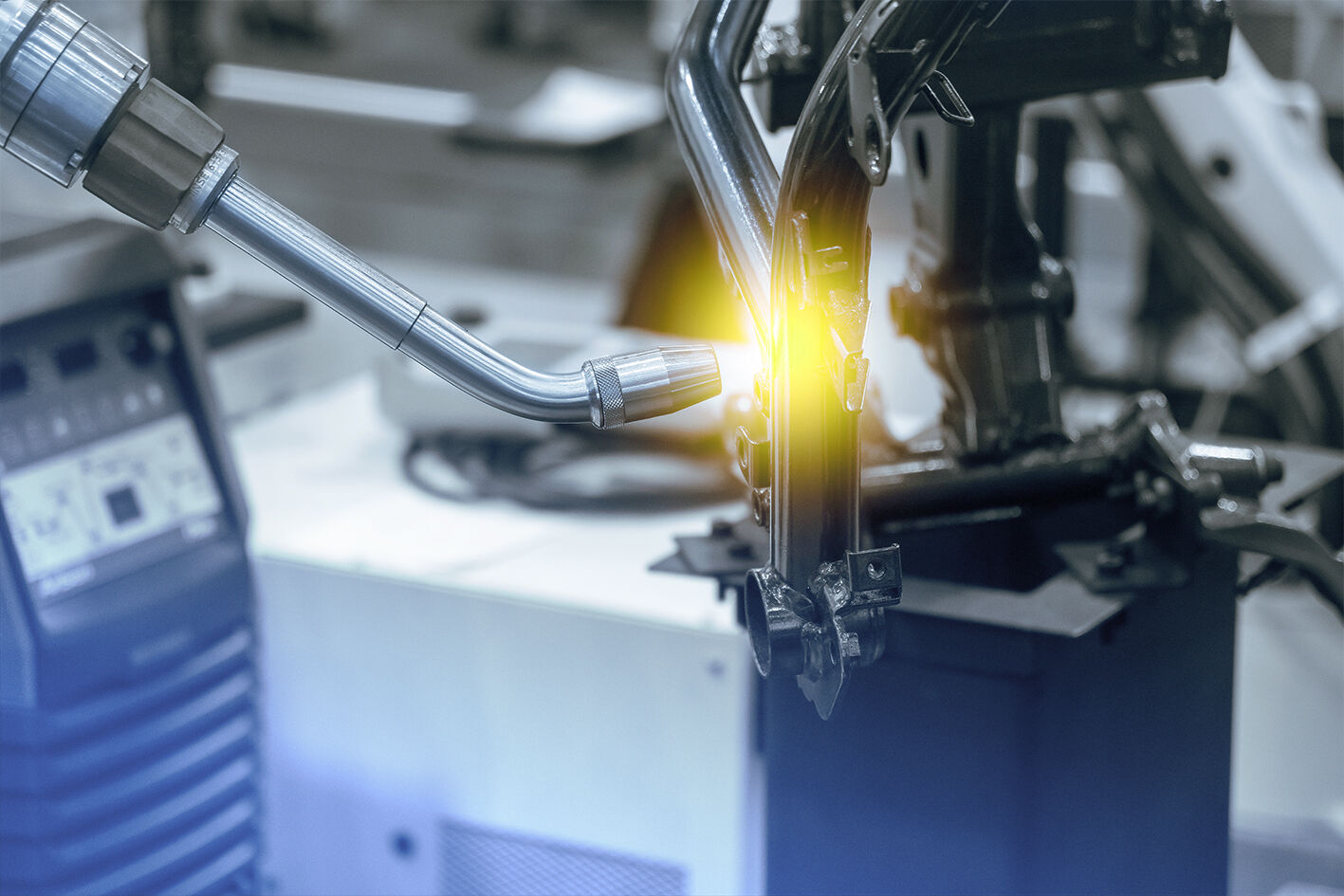
Robotic arc welding is a key technology in automated manufacturing where structural integrity, repeatability, and production efficiency are essential. High temperatures, spatter, electromagnetic interference, and continuous robot motion place extreme demands on both the welding process and robotic precision.
Reliable arc welding automation therefore requires more than precise torch positioning — it demands stable robot calibration, controlled process parameters, and consistent TCP accuracy over long production cycles.
BizLink supports manufacturers with advanced robotic calibration solutions that ensure long-term weld seam stability in demanding industrial environments.
What is Arc Welding?
Arc welding is a thermal joining process in which an electric arc forms between an electrode and the base material. The arc generates temperatures exceeding 6,000°C, melting the workpiece and — depending on the process — the filler material. After cooling, a strong metallurgical bond is formed.
How the Arc Welding Process Works
The process includes:
- Electric arc generation between electrode and workpiece
- Controlled melting of base material and filler wire
- Shielding gas protection to prevent oxidation
- Solidification of the molten weld pool
In robotic applications, the welding torch is mounted to an industrial robot that moves along a precisely programmed path. Continuous wire feed, stable arc control and accurate motion execution are critical to seam quality.
Common Arc Welding Methods
Robotic arc welding typically includes:
- MIG / MAG Welding (GMAW) – High-speed welding using a consumable wire electrode
- TIG Welding (GTAW) – High-precision welding with a non-consumable tungsten electrode
- Plasma Arc Welding – Increased arc stability and penetration for specialized applications
Each method requires stable arc characteristics, reliable wire feed and precise robotic positioning.
Why Robotic Arc Welding Is Essential in Modern Manufacturing
The quality and consistency of a welding seam directly impact structural performance and downstream production efficiency. Insufficient weld quality can cause defective components, high reject rates, costly rework or production stoppages.
Robotic arc welding enables:
- Repeatable seam geometry
- Controlled heat input
- Stable production cycles
- Increased overall equipment effectiveness (OEE)
True process stability depends on consistent robotic positioning and controlled calibration.
Consistent Weld Quality and Seam Accuracy
Industrial robots follow programmed paths with high repeatability. However, weld seam accuracy depends on:
- Correct TCP definition
- Stable torch positioning
- Controlled arc length
- Accurate robot calibration
Even minor positional deviations can influence penetration depth and seam geometry.
Increased Productivity and Reduced Downtime
Automated welding cells operate continuously under high cycle rates. Typical causes of weld inconsistency include:
- Contact tip wear
- Torch replacement or adjustment
- Thermal expansion
- Gradual TCP drift
Regular verification and compensation of TCP deviations significantly reduce these risks.
Improved Workplace Safety
Arc welding generates intense heat, UV radiation and welding fumes. Automation removes operators from hazardous areas while maintaining consistent production quality.
Industrial Applications of Robotic Arc Welding
Arc welding is widely used in industries requiring strong structural joints and repeatable quality.
Automotive Manufacturing
Typical applications include:
- Side beams
- Wheel arches
- Chassis components
- Body-in-white assemblies
High-volume production demands consistent torch positioning across millions of weld cycles.
Heavy Machinery and Construction Equipment
Large steel structures require deep penetration welds and stable robot positioning under harsh environmental conditions.
Aerospace and Shipbuilding
Applications demand precision, documentation and strict adherence to welding tolerances.
Critical Quality Factors in Robotic Arc Welding
Arc welding performance depends on multiple interacting factors.
Tool Center Point (TCP) Accuracy and Stability
The TCP defines the working point of the welding torch. Deviations may occur due to:
- Contact tip wear
- Torch replacement or cleaning
- Mechanical tolerances
- Thermal effects
Even minor positional shifts can result in seam deviation or inconsistent penetration.
Managing Contact Tip Wear and Thermal Influence
In MIG/MAG welding, the copper contact tip is subject to continuous wear. As it degrades, the effective wire position changes relative to the programmed robot path.
Without verification and compensation, gradual positional drift can compromise weld integrity over time.
Shielding Gas and Wire Feed Stability
Stable gas flow and consistent wire feed are essential for arc stability and seam integrity. Fluctuations in these parameters can directly influence bead formation and weld penetration.
Managing Electromagnetic Interference (EMI)
Arc welding generates high electrical currents that can produce electromagnetic interference. This interference may affect sensor signals and communication systems within the robotic cell.
Stable grounding concepts and careful system integration reduce the risk of signal disturbance.
Process Stability Through Advanced Robot Tool Calibration
Robotic arc welding performance depends on precise torch positioning and long-term calibration stability.
Thermal load, contact tip wear and repeated torch servicing can gradually influence the effective TCP position. Sustainable weld quality is therefore not only a matter of parameter control — it requires reliable and repeatable tool calibration.
Why TCP Deviations Affect Weld Seam Quality
In arc welding, the Tool Center Point (TCP) defines the exact position of the welding wire relative to the joint.
Even small TCP shifts can result in:
- Weld seam deviation
- Inconsistent penetration depth
- Irregular bead geometry
- Increased reject rates
Maintaining accurate TCP alignment is critical for repeatable weld seam quality.
BizLink Solutions for Robotic Arc Welding Applications
Reliable robotic arc welding requires precise and repeatable TCP control.
BizLink advintec TCP Tool Measurement
BizLink advintec TCP enables automated and highly precise verification of the robot’s tool center point (TCP) directly within the production environment.
The system is independent of the specific welding process and primarily depends on the geometry of the robot tool. Rotation-symmetric welding torches can be calibrated particularly easily. Even complex or indirectly measurable torch configurations can be referenced using auxiliary pins or defined reference components.
By compensating measured deviations directly within the robot program, BizLink advintec TCP:
- Maintains consistent weld seam positioning
- Supports stable arc length control
- Reduces positional drift over time
- Enhances weld repeatability in multi-shift production
Regular in-process verification helps prevent cumulative inaccuracies and supports long-term weld seam stability.
FAQ Arc Welding
Why Is Proper Grounding Important in Robotic Arc Welding Systems?
Proper grounding ensures a stable return path for welding current and directly influences arc stability and weld quality.
Insufficient grounding can cause arc instability, irregular penetration, and increased spatter formation.
A well-designed grounding concept includes secure workpiece grounding and separation of power and signal lines to minimize electromagnetic interference.
How Often Should the Tool Center Point (TCP) Be Verified?
TCP verification should be performed regularly — especially:
- After torch replacement
- After contact tip changes
- After collisions
- During preventive maintenance intervals
Automated TCP verification enables fast in-process validation and compensation of positional deviations.
What Are the Most Common Causes of Weld Seam Deviation?
Common causes include:
- TCP misalignment
- Contact tip wear
- Thermal expansion
- Arc instability
- Inconsistent wire feed
Even small positional errors can accumulate over high production volumes. Consistent calibration is essential to maintain seam geometry and penetration depth.
Ensure Maximum Weld Stability in Your Automated Production
BizLink supports manufacturers with advanced robotic calibration solutions for arc welding applications.
Let’s evaluate your arc welding process and identify opportunities to improve seam accuracy, reduce reject rates and strengthen long-term production stability.