
Robotic Screwdriving Solutions for Industrial Automation
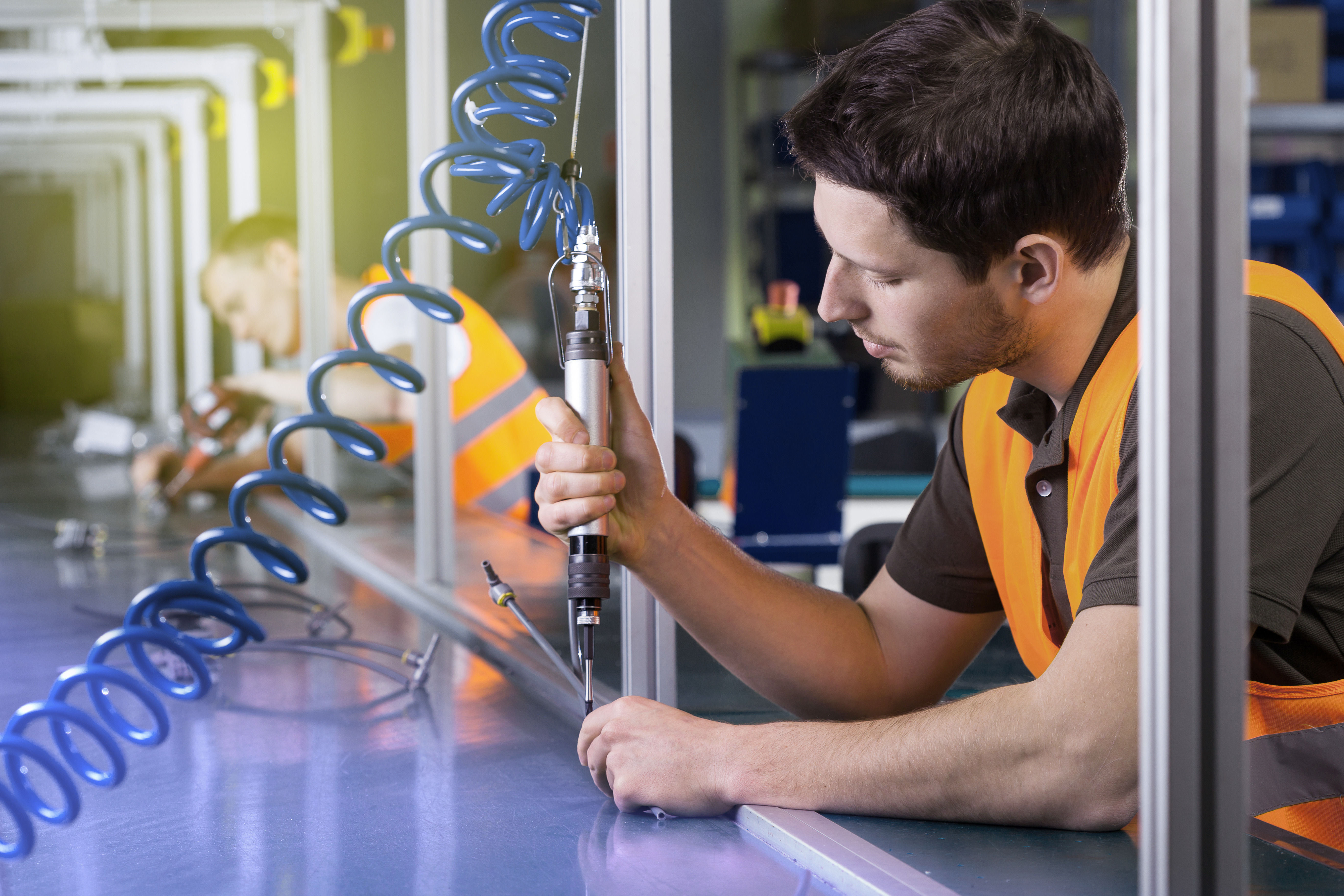
Robotic screwing, also known as automated screwdriving, is a fastening process in which industrial robots position and tighten screws with controlled torque and angle accuracy. The process ensures repeatable mechanical connections in high-volume production environments.
From automotive assembly lines to electronics manufacturing and appliance production, robotic screwing systems provide consistent fastening quality, traceability and process control.
High cycle rates, reaction torque forces and dynamic robot motion place significant demands on mechanical stability, cable routing and signal transmission. Reliable energy supply and controlled dresspack systems are essential to maintain fastening accuracy and long-term uptime.
With decades of global experience in robotic energy and media management, BizLink supports manufacturers with engineered cable, dresspack and monitoring solutions optimized for high-cycle screwing applications.
What Is Robotic Screwdriving?
Robotic screwdriving is an automated fastening process in which a robot positions a screwdriving tool at predefined coordinates and applies controlled torque to secure components.
Unlike manual fastening, robotic systems provide:
- Precise torque control
- Consistent angle monitoring
- High repeatability
- Integrated quality documentation
Automated screwdriving is particularly suitable for applications requiring traceability, structural reliability and short cycle times.
How the Robotic Screwdriving Process Works
The process typically includes:
- Positioning the component
- Feeding and aligning the screw
- Applying controlled torque and angle
- Monitoring tightening parameters
- Verifying fastening quality
Joint reliability depends on:
- Stable TCP accuracy
- Controlled torque delivery
- Tool alignment
- Reliable signal transmission
Even small positional deviations can lead to cross-threading, insufficient preload or cosmetic damage.
Robotic Screwdriving System Components
Electric vs. Pneumatic Screwdrivers
Robotic applications typically use either electric or pneumatic screwdriving spindles.
Electric screwdrivers provide precise torque and angle control with integrated data feedback. They are preferred in safety-critical and traceable production environments.
Pneumatic systems are often used in simpler or high-speed applications where basic torque shutoff is sufficient.
System stability and cable routing must be adapted to the specific spindle type and torque profile.
Torque and Angle Monitoring
Modern robotic screwdriving systems use torque-based shutoff, torque-and-angle monitoring or transducerized measurement systems.
Transducer-based systems offer the highest accuracy and enable documentation of tightening curves for quality assurance and traceability.
Stable signal transmission and vibration-controlled routing are essential to ensure reliable measurement data.
Automated Screw Feeding Systems
Screw feeding systems supply screws to the tool head through blow-feed or pick-and-place mechanisms.
Reliable feeding:
- Reduces cycle interruptions
- Prevents misalignment
- Improves process efficiency
Stable routing of feed hoses and cables ensures uninterrupted operation in high-cycle environments.
Why Robotic Screwdriving Is Critical in Modern Manufacturing
Automated screwdriving improves:
- Process repeatability
- Torque consistency
- Documentation and traceability
- Production efficiency
- Worker ergonomics
In high-volume manufacturing, robotic screwing ensures uniform fastening performance across thousands of cycles per shift.
However, screwing tools generate reaction torque and vibration, which influence robot stability and dresspack stress. Without controlled cable routing, long-term reliability can be compromised.
Critical Quality Factors in Robotic Screwdriving Applications
Torque Accuracy and Clamp Force Control
Correct torque ensures proper clamp force and joint integrity. Variations in tool alignment, signal instability or mechanical vibration can influence tightening performance.
Reaction Torque and Mechanical Stability
During tightening, reaction forces act on the robot arm. These forces introduce torsion and vibration that may stress cables and routing systems. Engineered dresspack stabilization reduces mechanical load and improves durability.
TCP Accuracy and Tool Alignment
Precise positioning prevents cross-threading, stripped threads and inconsistent seating. Automated TCP verification maintains long-term fastening accuracy.
Signal and Communication Reliability
Screwdriving systems often integrate torque sensors, angle monitoring and quality documentation systems. Stable signal transmission is essential for traceable fastening performance.
Industrial Applications of Robotic Screwdriving
Automotive Manufacturing
Automated screwdriving is used in interior assembly, battery systems, seat mounting, dashboard installation and structural fastening.
Electronics Manufacturing
Robotic screwing secures housings, circuit board assemblies and precision components requiring controlled torque.
E-Mobility and Battery Production
High-precision fastening ensures safe and reliable assembly of battery modules and enclosures.
BizLink Solutions for Robotic Screwdriving Applications
High-Flex Robotic Cables
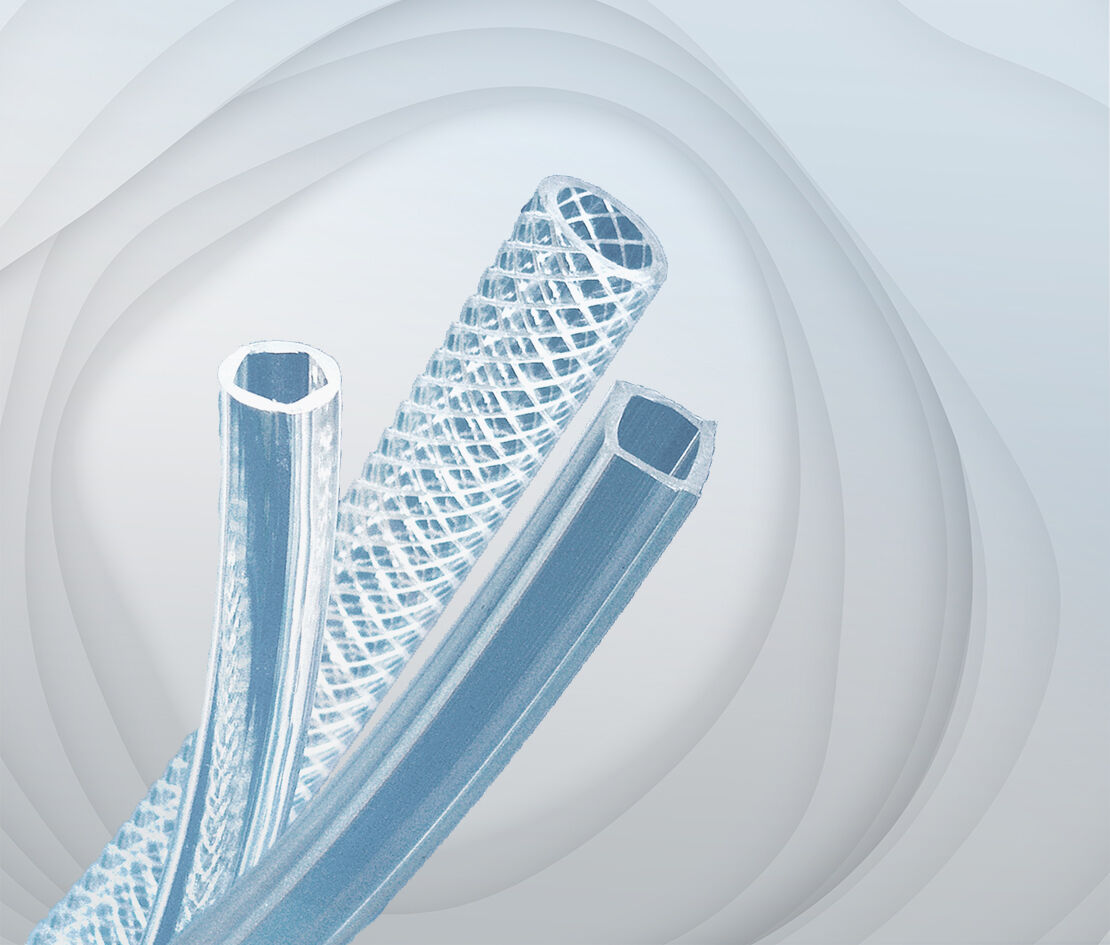
Robotic screwdriving tools generate reaction torque and vibration during tightening cycles. BizLink high-flex cables are engineered for continuous torsion and bending under dynamic robotic motion, ensuring stable power supply and signal transmission for torque and angle monitoring systems.
Optimized conductor design and durable insulation reduce fatigue caused by repetitive tightening cycles and mechanical load.
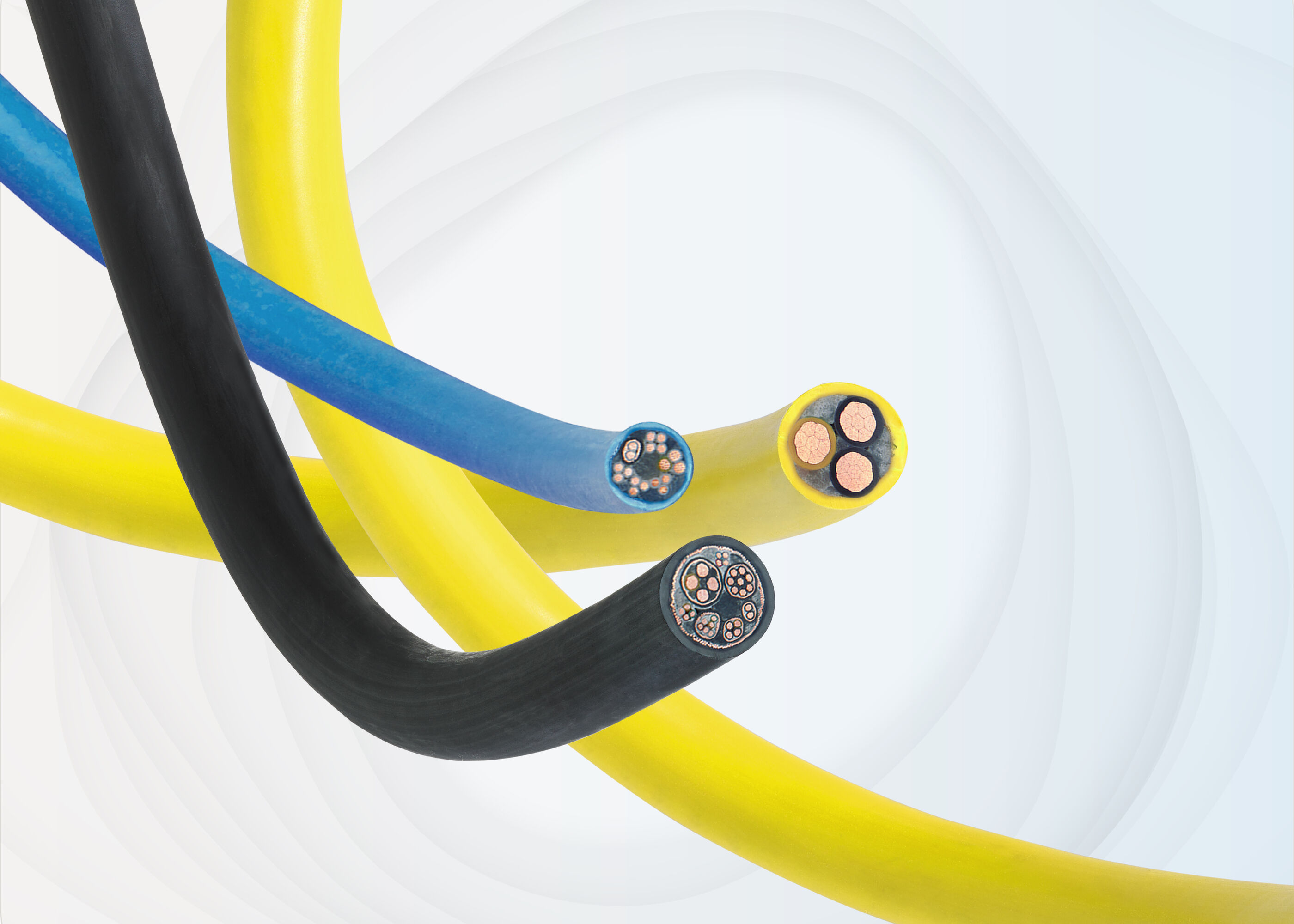
Engineered Dresspack Systems
During tightening, reaction torque introduces torsional stress into the robot arm and attached routing systems. Optimized dresspack solutions stabilize cable and hose movement, absorb mechanical stress and maintain defined bending radii.
Controlled routing supports consistent tool alignment, reduces mechanical interference and extends component lifetime in high-cycle fastening applications.
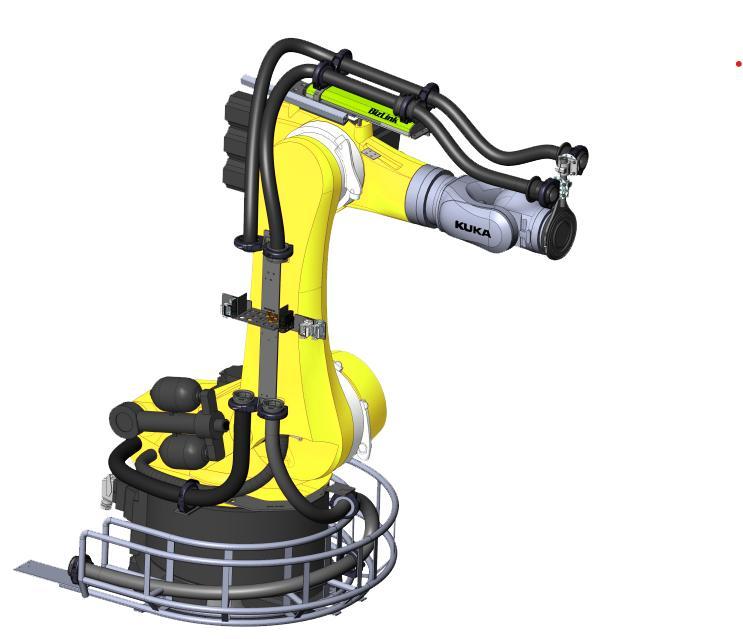
BizLink Tube Profile-Line – Feeding Hoses for Riveting Systems
In automated screwdriving systems, reliable component feeding is critical for stable cycle times and uninterrupted production. The BizLink Tube Profile-Line is designed for pneumatic delivery systems used in screw, rivet and weld nut feeding applications.
In high-cycle screwdriving environments, screwdrivers move at high velocity through feeding hoses. Abrasion resistance, dimensional stability and consistent internal geometry are critical to prevent misfeeds and cycle interruptions.
These customized polyurethane hoses offer high abrasion resistance, strong dimensional stability and resistance to oils and common industrial media. Silicone-free and paint-resistant construction makes them suitable for demanding automotive and industrial environments.
Profiles, reinforcement, and pressure characteristics, combined with low vibration tendency, can be adapted to specific feeding requirements.
BizLink advintec TCP Tool Measurement
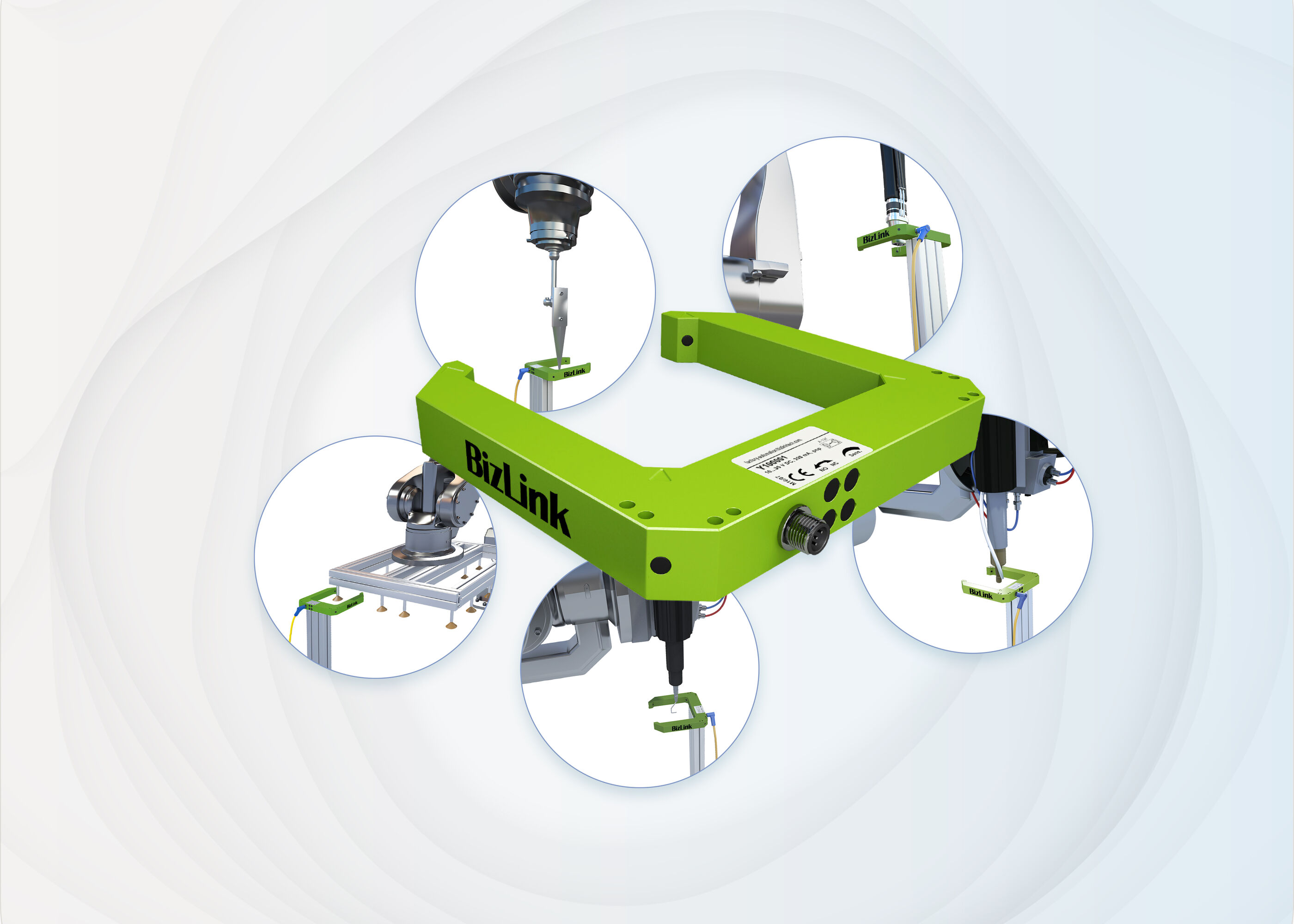
Accurate screw positioning is essential to prevent cross-threading, incomplete seating or cosmetic surface damage. BizLink advintec TCP enables automated and highly precise verification of the robot’s tool center point (TCP) directly within the production environment.
The system is independent of the specific application and primarily depends on the geometry of the robot tool. Rotation-symmetric robotic tools can be calibrated particularly easily. Even complex or indirectly measurable tools can be referenced using auxiliary pins or defined reference components.
By compensating measured deviations directly within the robot program, advintec TCP supports consistent screw alignment, reduces positional drift over time and enhances fastening reliability across high-cycle production environments.
careDP – AI-Powered Condition Monitoring
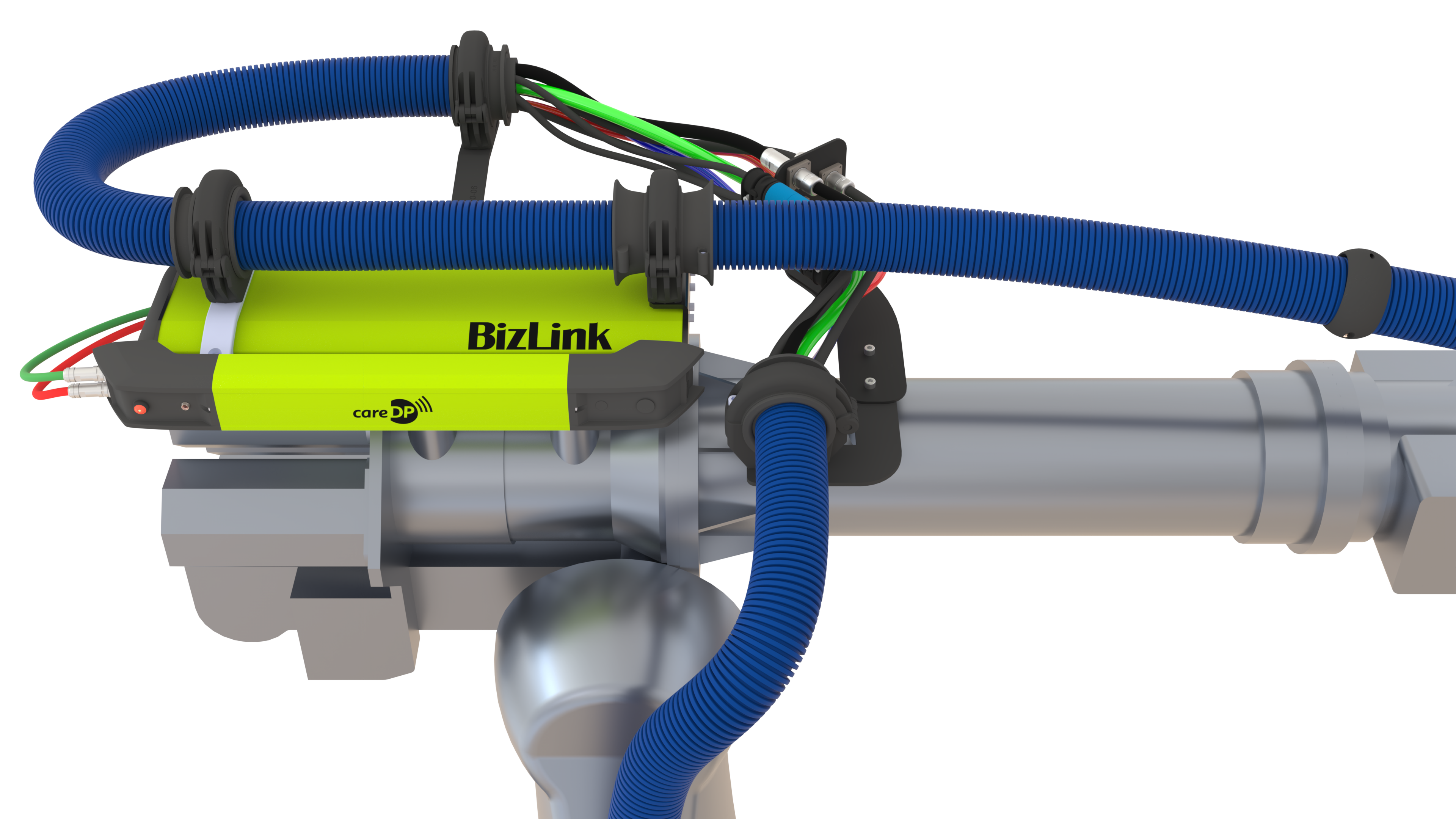
In robotic screwdriving applications, continuous tightening cycles and reaction torque place ongoing mechanical stress on cables, hoses and routing systems. careDP analyzes robotic dresspack movement behavior and detects early signs of abnormal stress patterns or wear development.
Predictive insights enable proactive maintenance planning and help prevent unexpected failures that could interrupt fastening operations.
By combining durable cables, optimized feeding hoses, controlled routing and intelligent monitoring, BizLink strengthens screw alignment accuracy, feeding reliability and overall equipment effectiveness in automated fastening systems.
FAQ Screwdriving
What are the most common failure issues in robotic screwdriving?
Common issues include cross-threading, insufficient torque, over-tightening, tool misalignment and cable fatigue caused by reaction torque stress. Stable positioning and controlled routing reduce these risks.
How does reaction torque affect robotic systems?
Reaction torque generated during tightening introduces mechanical stress into the robot arm and dresspack. Without structured cable routing, torsional forces may accelerate cable wear and reduce system lifetime.
What causes screwdriving tool wear in automated systems?
High cycle rates, misalignment, excessive vibration, and unstable routing can accelerate spindle wear and cable fatigue. Proper mechanical stabilization reduces tool stress.
Why is torque monitoring important in automated fastening?
Torque monitoring ensures correct clamp force and joint integrity. It enables traceability and prevents under- or over-tightening that could compromise safety or product durability.
How can TCP deviations influence screw quality?
Small positional deviations may cause misalignment, cross-threading or inconsistent seating depth. Automated TCP verification ensures consistent screw placement over long production runs.
How can predictive maintenance improve screwdriving uptime?
Monitoring mechanical stress and dresspack movement patterns allows early detection of wear, preventing unexpected cable or routing failures in high-cycle fastening applications.
Secure Long-Term Reliability in Robotic Screwdriving Systems
Robotic screwing performance depends on precise torque control, stable mechanical infrastructure and controlled cable routing under reaction forces.
Whether you are an OEM, system integrator, automation engineer or maintenance manager responsible for fastening performance, BizLink supports you in designing reliable, high-performance robotic screwdriving systems.
Let’s evaluate your screwdriving application and identify opportunities to improve torque accuracy, system stability and long-term production uptime.