
Gluing & Adhesive Dispensing
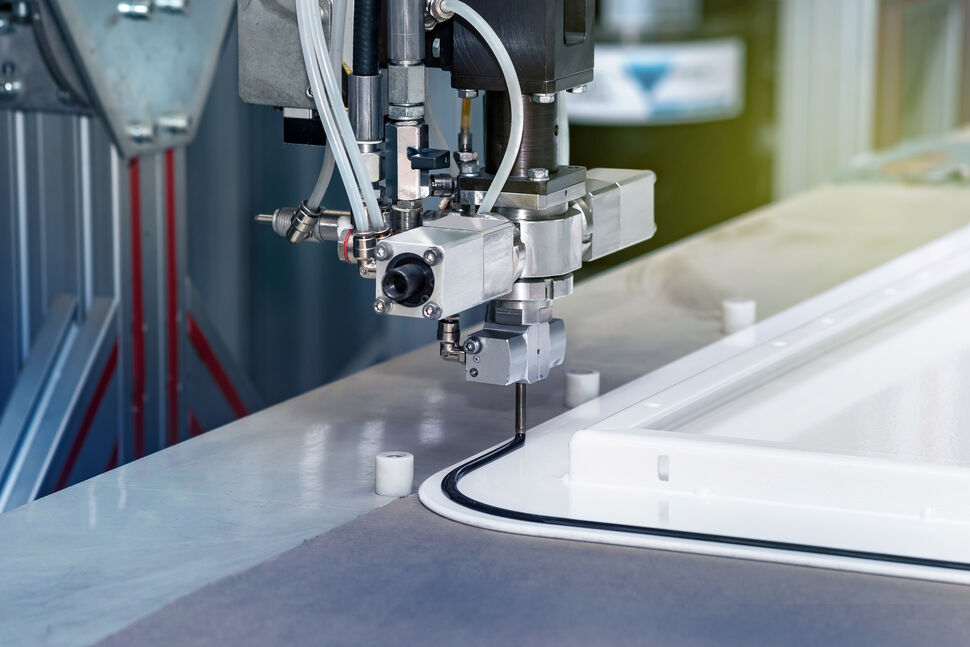
Robotic gluing, also known as robotic adhesive dispensing, is a precision joining and sealing technology used to apply adhesives, sealants or bonding materials in automated production environments. The process enables consistent material application, repeatable bead geometry and controlled bonding performance across complex surfaces.
From structural bonding in automotive manufacturing to sealing applications in electronics and appliance production, robotic dispensing systems support lightweight construction, improved product durability and streamlined assembly processes.
High cycle rates, temperature-sensitive materials and complex robot motion place significant demands on positioning accuracy, media supply stability and cable management. Reliable energy transmission, controlled hose routing and stable signal communication are essential to ensure process consistency and production uptime.
With decades of global experience in robotic energy and media management, BizLink has delivered hundreds of thousands of cable and dresspack solutions across high-volume manufacturing environments. Manufacturers rely on our system-focused engineering approach to ensure long-term stability in demanding gluing applications.
What Is Robotic Gluing?
Robotic gluing refers to the automated application of adhesives, sealants or bonding agents using programmable industrial robots. The robot moves a dispensing head along a defined path, applying a precise bead of material onto components or assemblies.
Adhesives may include structural epoxy systems, polyurethane adhesives, silicone sealants, acrylic bonding agents and hot-melt materials.
How the Robotic Dispensing Process Works
A typical robotic gluing cycle includes positioning the component, executing a programmed robot path, activating controlled adhesive flow, applying a continuous bead along defined geometry and allowing the material to cure or set.
Consistent bead geometry depends on stable TCP accuracy, controlled dispensing pressure, temperature stability of adhesive lines and reliable signal and power transmission. Even small positional or pressure deviations can affect bond strength and sealing integrity.
Why Robotic Gluing Is Critical in Modern Manufacturing
Adhesive bonding enables weight reduction, improved structural performance, enhanced sealing properties and vibration damping. In automated production, robotic systems deliver high repeatability, short cycle times and reduced material waste.
However, adhesive dispensing is highly sensitive to mechanical variation. Hose movement, torsional stress and unstable cable routing can directly influence bead consistency and process stability.
Critical Quality Factors in Robotic Gluing Applications
Precise TCP and Path Accuracy
Uniform adhesive application requires verified tool center point accuracy. Deviations may lead to irregular bead width, insufficient coverage, excess material usage and increased rework. Automated TCP verification ensures consistent long-term positioning.
Stable Media and Hose Management
Adhesive systems rely on pressurized and often temperature-controlled material supply. Poor routing can cause flow instability, hose fatigue, pressure loss or premature wear. Structured dresspack systems protect hoses and signal cables under dynamic robot motion.
Controlled Mechanical Routing
Uncontrolled cable movement introduces torsional stress, mechanical interference and positioning instability. Optimized routing ensures predictable motion behavior and extended component lifetime.
Environmental and Process Stability
Temperature, humidity and material viscosity influence adhesive performance. Stable robotic infrastructure supports consistent dispensing quality across shifts and production volumes.
Adhesive and Dispensing System Technologies in Robotic Gluing
Successful robotic gluing depends not only on robot positioning, but also on the correct selection of adhesive materials and dispensing technology.
Automated systems typically combine:
- Metering and mixing units
- Pressure or pump-driven material supply
- Dispensing valves and nozzles
- Temperature control systems
- Integrated process monitoring
1K vs. 2K Adhesive Systems
One-component (1K) adhesives are pre-mixed materials that cure through heat, moisture or UV exposure. They simplify system integration and are commonly used for sealing and structural bonding.
Two-component (2K) systems require precise mixing of resin and hardener immediately before application. These systems provide higher structural strength but demand accurate ratio control and stable media routing.
Hot Melt, Epoxy, and Polyurethane Adhesives
Different industries require different adhesive chemistries:
- Hot melt adhesives for high-speed assembly
- Epoxy systems for structural bonding
- Polyurethane adhesives for flexibility and vibration damping
- Silicone sealants for environmental sealing
Material properties directly influence viscosity, curing time, and dispensing pressure requirements.
Metering, Mixing, and Flow Control
Consistent bead geometry depends on:
- Stable material pressure
- Accurate pump control
- Controlled hose routing
- Temperature stability
Mechanical stress or hose torsion can influence pressure stability and flow consistency, affecting bond quality.
Dispensing Valves and Nozzle Technology
Needle valves, jet valves and spray systems are used depending on bead size and application speed. Precise robot path execution and stable tool alignment ensure repeatable material placement.
Industrial Applications of Robotic Gluing
Automotive Manufacturing
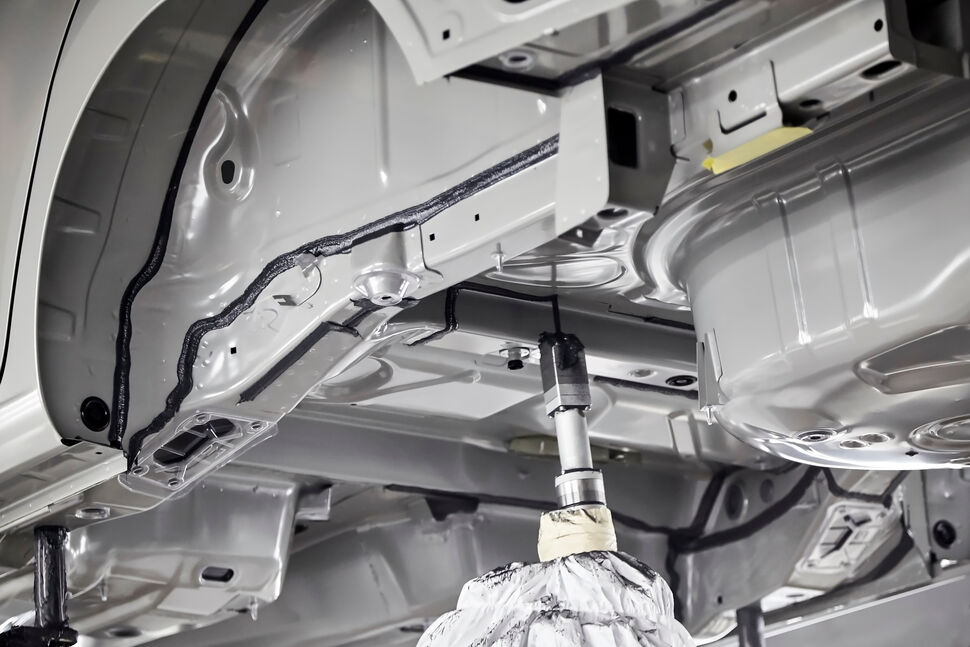
Applications include body seam sealing, structural bonding, battery housing assembly, roof module bonding and interior trim installation. Automotive production requires high repeatability and reliable performance in multi-shift environments.
Electronics and Electrical Manufacturing
Encapsulation, potting, PCB sealing and component fixation demand precise material application with minimal waste.
Appliance Manufacturing
Adhesive dispensing supports housing assembly, insulation bonding and water-tight sealing processes.
Battery and E-Mobility Production
Robotic gluing is used for battery module bonding, thermal interface material application and structural reinforcement, requiring high positioning accuracy and stable media supply.
Aerospace and Advanced Manufacturing
Lightweight bonding solutions provide structural integrity without additional mechanical fasteners.
BizLink Solutions for Robotic Gluing Applications
Reliable adhesive dispensing depends on stable media routing, precise tool positioning and a robust robotic infrastructure that supports both material supply and energy transmission.
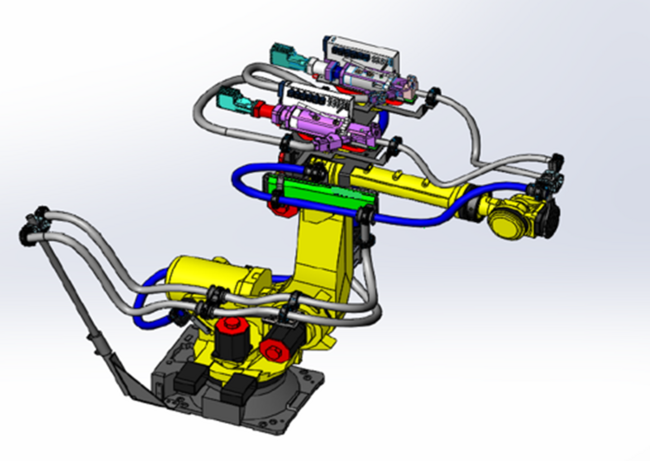
In robotic gluing applications, dispensing systems are typically provided by specialized adhesive equipment suppliers. Depending on the system design, material supply units may be installed externally (e.g. barrels, pumps or metering systems next to the robot or on axis 3) or partially integrated onto the robot itself.
BizLink supports these architectures by ensuring controlled routing, protection and stability of all required cables and hoses under dynamic robot motion.
Optimized Routing for Adhesive Supply Systems
In many gluing applications, adhesives are delivered from external supply systems through pressurized and often temperature-controlled hoses to the dispensing head.
These hoses are typically provided by the dispensing system supplier, but their routing on the robot is critical for process stability.
BizLink provides engineered routing solutions that:
- Stabilize adhesive hoses under dynamic motion
- Maintain defined bending radii
- Reduce torsion and mechanical stress
- Protect hoses from abrasion and thermal influence
This ensures consistent material flow, stable pressure conditions and reliable bead quality across long production cycles.
Cable Management for Robotic Gluing Tools and Systems
In addition to adhesive supply lines, robotic gluing applications require power, control and signal transmission for dispensing heads, valves, sensors and heating systems.
BizLink cable management systems ensure:
- Stable energy supply to the dispensing tool
- Reliable signal communication for process control
- Protection of cables under high-cycle robotic motion
Whether the dispensing system is mounted externally or partially integrated on the robot, controlled routing supports consistent tool behavior and long-term system reliability.
High-Flex Robotic Cables
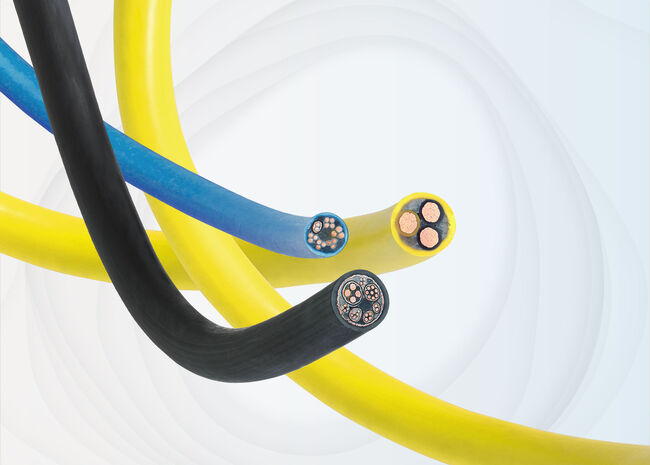
BizLink cables are engineered for continuous torsion and bending in dynamic robotic environments. They support stable power and signal transmission for dispensing systems, including heated hoses, valves and monitoring components.
Durable insulation and optimized conductor design reduce fatigue and ensure reliable performance in high-cycle adhesive applications.
BizLink advintec TCP Tool Measurement
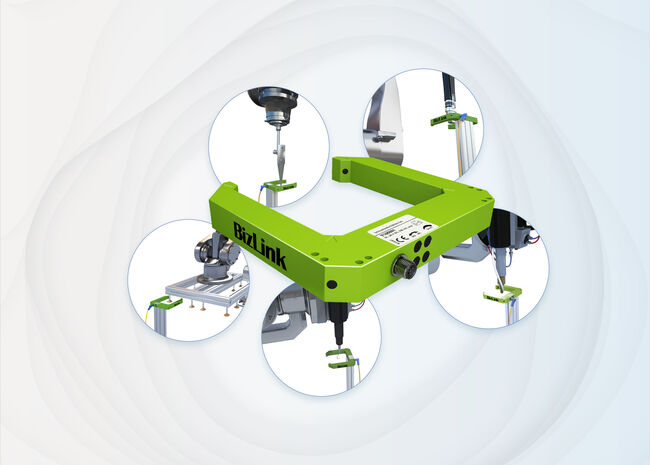
BizLink advintec TCP enables automated and highly precise verification of the robot’s tool center point (TCP) directly within the production environment. Accurate TCP alignment is essential in all robotic applications where positioning precision influences process quality.
The system is independent of the specific application and primarily depends on the geometry of the robot tool. Rotation-symmetric robotic tools can be calibrated particularly easily. Even complex or indirectly measurable tools can be referenced using auxiliary pins or defined reference components.
By compensating measured deviations directly within the robot program, advintec TCP supports long-term positional stability, reduces cumulative inaccuracies and enhances overall process reliability across high-cycle production environments.
careDP – AI-Powered Condition Monitoring
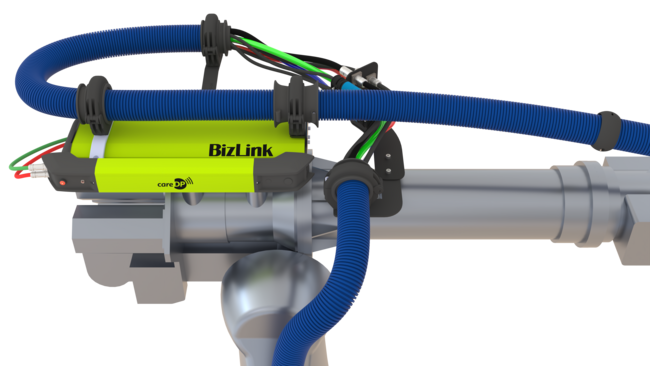
careDP monitors robotic dresspack behavior and detects early signs of wear or abnormal motion patterns, enabling predictive maintenance and reducing unexpected downtime.
Frequently Asked Questions (FAQ) About Robotic Gluing Applications
How does adhesive viscosity affect robotic dispensing quality?
Adhesive viscosity directly influences flow rate, bead shape, and application consistency. Variations in temperature or material aging can change viscosity and lead to irregular bead geometry or inconsistent bonding performance. Stable temperature control, pressure regulation, and hose routing are essential to maintain consistent material behavior during automated dispensing.
What is the difference between bead dispensing and spray application in robotic gluing?
Bead dispensing applies a continuous, controlled line of adhesive for structural bonding or sealing applications. Spray application distributes adhesive over a surface area and is often used for coating or lightweight bonding. Each method requires different nozzle technology, flow control precision, and robotic path accuracy.
How can bead consistency be maintained over long production cycles?
Bead consistency depends on stable TCP accuracy, controlled adhesive pressure, consistent material temperature, and mechanical stability of hoses and dresspacks. Automated calibration routines and structured cable management reduce mechanical influence on the dispensing head and help maintain long-term process stability.
What causes air bubbles or voids in robotic adhesive application?
Air inclusions can result from unstable material pressure, improper hose routing, leaks in supply lines, or inconsistent pump behavior. Controlled media management and stable system integration help prevent pulsation and ensure uniform material flow.
When should robotic gluing replace mechanical fastening?
Robotic gluing is preferred when lightweight construction, vibration damping, improved sealing performance, or surface aesthetics are required. Adhesive bonding also reduces part count and eliminates drilling or tapping operations, simplifying assembly.
What are the most common failure issues in robotic adhesive dispensing?
Common issues include hose fatigue, pressure instability, cable torsion damage, TCP drift and inconsistent bead geometry. Mechanical stress and temperature variation can accelerate wear and influence adhesive quality.
How does hose routing affect adhesive quality?
Improper routing may cause pressure fluctuations, pulsation and inconsistent bead width. Controlled hose management stabilizes material flow and improves dispensing precision.
Why is TCP accuracy important in robotic gluing?
Adhesive application requires precise bead placement. Even small deviations can affect bond strength, sealing performance and product quality. Automated TCP verification ensures consistent results.
How can predictive maintenance improve adhesive dispensing uptime?
Monitoring robotic motion and dresspack behavior enables early detection of hose wear or cable stress, preventing unexpected failures and improving production planning.
Ensure Uptime in Robotic Gluing Applications
Whether you are an OEM, system integrator, automation engineer or maintenance manager responsible for adhesive dispensing performance, BizLink supports you in designing reliable, high-performance robotic gluing systems.
Let’s evaluate your adhesive application and identify how to improve bead consistency, uptime and long-term process stability.