
Robotic Spot Welding Solutions for Industrial Automation
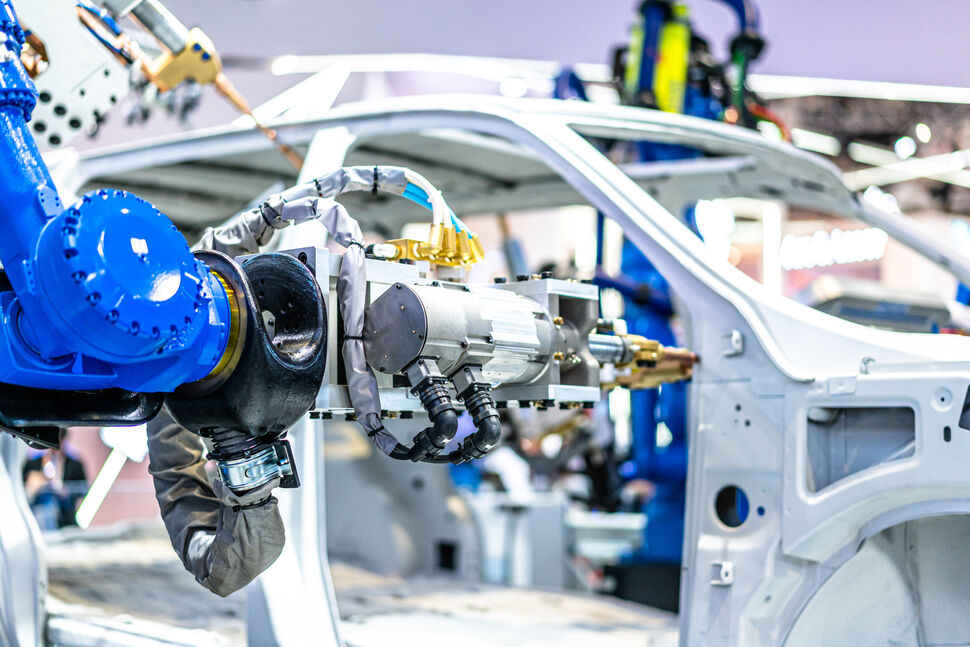
Robotic spot welding is a fundamental joining technology in high-volume manufacturing, particularly in automotive body production. The process enables fast, repeatable and structurally reliable connections between sheet metal components.
Due to high forces, electrical currents and dynamic robot movements, spot welding applications place significant demands on robot accuracy, cable systems, media supply and mechanical stability.
BizLink supports manufacturers with integrated robotic solutions that ensure long-term process reliability in demanding spot welding environments.
What Is Spot Welding?
Spot welding is a resistance welding process in which two or more overlapping metal sheets are joined by applying pressure and electrical current through copper electrodes. The electrical resistance generates heat at the contact point, forming a localized weld nugget.
Once the current stops and the material cools under pressure, a permanent bond is created.
How the Spot Welding Process Works
The process consists of:
- Positioning overlapping metal sheets
- Applying mechanical force via welding electrodes
- Passing high electrical current through the sheets
- Generating localized heat due to electrical resistance
- Forming a weld nugget under controlled pressure
Weld quality depends on the precise application of force, proper current flow, and accurate electrode positioning.
In robotic systems, welding guns are mounted to industrial robots that position them at each programmed weld point.
Typical Spot Welding Parameters
Key parameters include:
- Welding current
- Welding time
- Electrode force
- Electrode alignment
Even small deviations in positioning or force can affect nugget formation and structural integrity.
Why Robotic Spot Welding Is Essential in Modern Manufacturing
Spot welding is one of the most widely used joining methods in automotive body-in-white production. A single vehicle may contain several thousand spot welds.
High-volume production requires:
- Extremely high repeatability
- Short cycle times
- Stable mechanical and electrical performance
- Minimal downtime
Robotic spot welding ensures consistent quality while meeting demanding throughput targets.
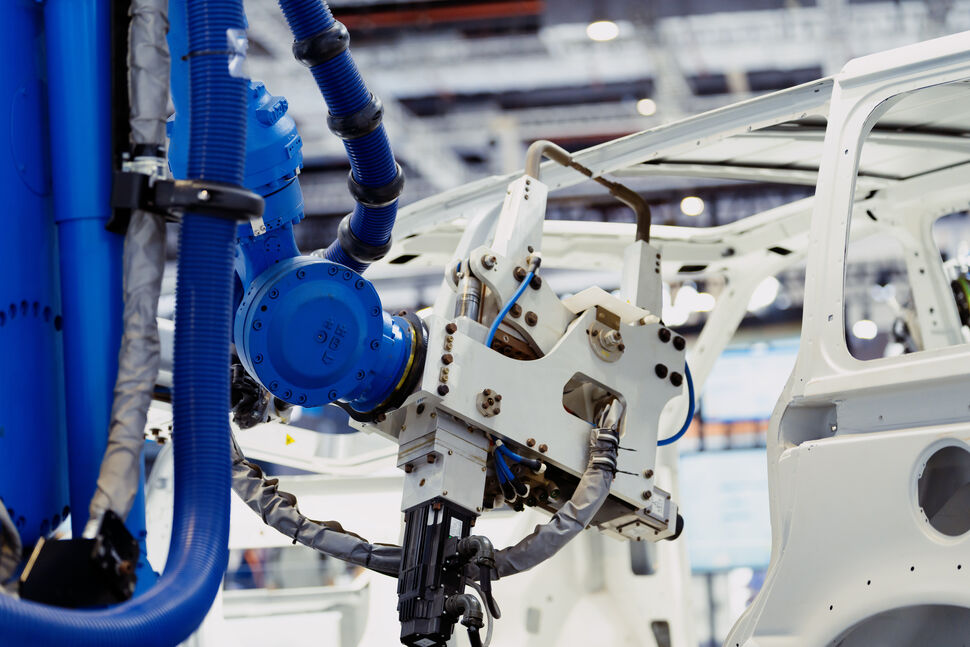
Consistent Weld Nugget Quality
Accurate electrode positioning ensures:
- Proper nugget formation
- Uniform weld strength
- Reduced risk of weak joints
Mechanical instability or misalignment directly impacts weld quality.
High Productivity in Body Manufacturing
Robotic spot welding systems operate at high speeds and perform thousands of weld cycles per shift. Reliability of all system components — including cables and dresspacks — is critical to maintaining production flow.
Improved Process Control and Traceability
Modern welding systems monitor current, force and timing parameters to ensure each weld meets specification.
Spot Welding Guns in Robotic Applications
The welding gun is the central tool in robotic spot welding. It applies mechanical force through copper electrodes while conducting high electrical current to form the weld nugget.
In automated systems, welding guns are mounted directly to the robot arm and significantly influence mechanical stability, cable routing, and overall system performance.
Leading Spot Welding Gun Suppliers in Automotive Manufacturing
Robotic spot welding systems typically integrate welding guns from specialized equipment manufacturers. Well-established suppliers in the automotive industry include companies such as ARO Welding Technologies, NIMAK, Düring, CenterLine, Comau, Obara, and Anhui PW.
These suppliers provide servo-driven C-guns and X-guns, transformers, and welding control systems that are widely used in high-volume body-in-white production.
BizLink solutions are designed to integrate seamlessly into these environments, supporting stable cable routing, reliable energy transmission, and long-term system performance in combination with leading welding gun technologies.
C-Gun vs. X-Gun Configurations
Two main welding gun types are commonly used:
C-type guns (C-guns) apply force from one side and are often used in compact or accessible geometries.
X-type guns (X-guns) use a scissor mechanism and are suitable for applications requiring extended reach or flexibility in confined areas.
The selected gun type affects robot load, center of gravity and dresspack routing strategy.
Servo vs. Pneumatic Welding Guns
Modern robotic spot welding systems increasingly use servo-driven guns instead of pneumatic systems.
Servo guns offer:
- Precise force control
- Consistent electrode pressure
- Integrated monitoring and traceability
- Improved energy efficiency
However, they introduce additional power and signal requirements that must be managed through stable cable systems.
In many robotic welding systems, the transformer is mounted directly on the welding gun. This reduces cable length for high-current transmission but increases weight and mechanical load on the robot.
Proper cable routing is essential to manage:
- High current cables
- Cooling lines
- Signal cables
- Mechanical reaction forces
Uncontrolled routing can influence positioning accuracy and accelerate wear.
Electrode wear, misalignment, or unstable force application directly affects weld nugget consistency.
Mechanical stability of the robotic infrastructure supports:
- Consistent electrode positioning
- Controlled force distribution
- Long-term weld quality
Industrial Applications of Robotic Spot Welding
Automotive Body-in-White Production
Applications include:
- Side panels
- Floor assemblies
- Doors and hoods
- Structural reinforcements
Automotive production lines require extremely robust robotic systems capable of millions of weld cycles annually.
Appliance and Sheet Metal Manufacturing
Spot welding is also used in washing machines, cabinets and structural sheet metal assemblies.
Battery and E-Mobility Applications
High-precision spot welding is increasingly relevant in battery module and enclosure manufacturing.
Critical Quality Factors in Robotic Spot Welding
Electrode Positioning Accuracy
Precise electrode alignment is critical for:
- Correct force distribution
- Consistent nugget formation
- Structural strength
Robot positional accuracy directly influences weld integrity.
High Electrical Current Transmission
Spot welding requires very high currents. Power cables must:
- Withstand thermal stress
- Maintain conductivity under dynamic motion
- Resist insulation degradation
Inadequate cable quality can lead to overheating or performance instability.
Mechanical Stress from Welding Guns
Spot welding guns are heavy and generate significant reaction forces. These forces can:
- Influence robot positioning
- Increase torsional stress on dresspacks
- Accelerate cable wear
Stable cable management systems are essential to minimize uncontrolled movement and stress.
Cable Management / Dresspack Stability
Poor routing may cause:
- Excessive torsion
- Premature cable failure
- Positioning inaccuracies
Optimized cable management ensures controlled movement and long service life in high-cycle environments.
Process Stability Through Integrated Calibration and System Design
Robotic spot welding performance depends on the precise interaction between positioning accuracy, electrical stability and mechanical robustness. High electrode forces, extreme current loads and heavy welding guns create continuous stress on the robotic system.
Long-term weld quality is therefore not only a function of welding parameters — it is the result of a stable robotic infrastructure.
Why Positional Deviations Impact Weld Quality
Misalignment of electrodes can lead to:
- Reduced weld nugget diameter
- Incomplete fusion
- Structural weakness
- Increased rework rates
Even small positional deviations affect force distribution and current flow at the weld point. Maintaining consistent electrode positioning is essential for repeatable weld integrity.
Maintaining Tool Accuracy in High-Cycle Environments
Spot welding robots perform thousands of cycles per shift. Mechanical wear, thermal expansion and dresspack movement can gradually influence the effective tool center point (TCP).
Regular tool verification and automated calibration routines help maintain long-term positional accuracy and prevent cumulative deviations.
Stable Energy and Signal Infrastructure
Spot welding requires extremely high current transmission combined with reliable signal and control communication. Any instability in:
- Power cables
- Control cables
- Media supply lines
can influence weld consistency or cause unplanned downtime.
A robust electrical and mechanical infrastructure is therefore fundamental to process stability.
Mechanical Stress and Dresspack Control
Spot welding guns are heavy and generate significant reaction forces. Uncontrolled cable routing can introduce torsion, additional load and mechanical interference, affecting both cable lifetime and robot positioning.
Structured dresspack design reduces stress and supports stable robot motion.
Spot Welding System Architectures in Automated Production
Robotic spot welding systems are commonly implemented using two different control architectures.
In one setup, the welding controller is integrated into the robot controller cabinet. In this configuration, the robot controller manages welding power as well as the opening and closing of the welding gun. This enables a highly integrated system design, but it also creates a closer dependency between the welding process and the selected robot brand.
In the second setup, the welding cabinet is installed as a separate unit. Here, the welding cabinet manages welding power and gun actuation independently of the robot controller. This architecture gives manufacturers greater flexibility, especially when changing or upgrading robot brands, because the welding system remains decoupled from the robot platform.
Both system concepts are widely used in industrial spot welding. The selected architecture influences cable routing, cabinet layout and, in larger production cells, the need for long dynamic cable runs between the robot, welding cabinet and peripheral equipment.
In addition, some robotic spot welding systems are mounted on linear axes to increase working range. In these cases, power and control cables are routed through floor-mounted drag chains, placing additional demands on cable flexibility, durability and long-travel performance.
BizLink Solutions for Robotic Spot Welding
High-Performance Welding and Power Cables
Spot welding applications require the transmission of extremely high currents under continuous dynamic motion. BizLink welding cables are designed for high current transmission, stable conductivity and long service life under thermal and mechanical stress.
This supports reliable energy delivery to the welding gun and helps maintain stable weld quality in high-cycle production environments.
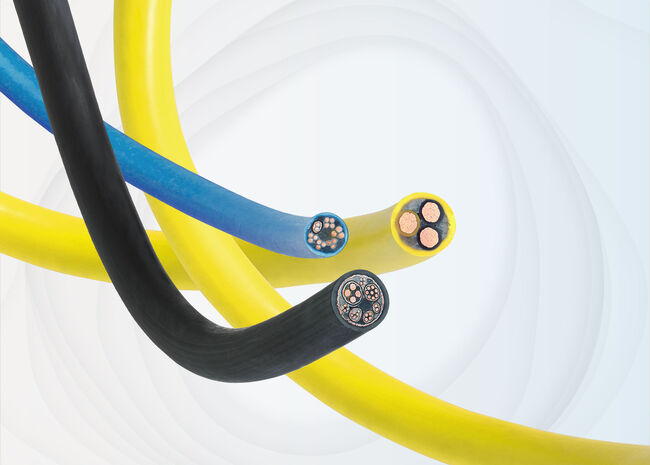
Floor Track and Drag Chain Cable Solutions
In spot welding cells, power and control cables often need to be routed over longer distances between the robot system and external equipment such as separate welding cabinets.
This applies to:
- robots mounted on linear axes, where cables are guided through floor-mounted drag chains under continuous movement
- stationary robot installations, where cables are installed as fixed connections over longer distances without dynamic guidance
BizLink provides floor track cables engineered for both scenarios. These cables are designed to:
- Support reliable power transmission over extended distances
- Withstand continuous dynamic bending in drag chain systems
- Maintain durability and signal stability in fixed installations
- Handle high electrical loads typical for spot welding applications
This ensures consistent connectivity and long service life across different welding cell layouts and integration concepts.
Engineered Cable Management / Dresspack Systems
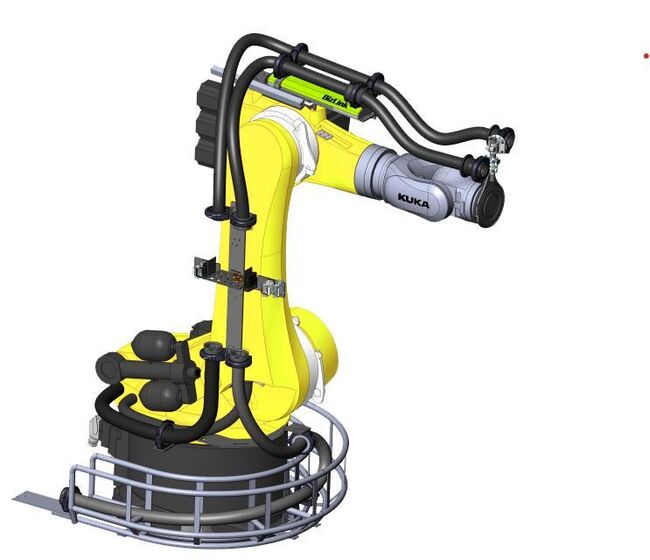
Spot welding guns generate significant reaction forces that introduce torsion and mechanical load into the robot arm and dresspack. BizLink cable management systems are designed to stabilize cable movement, maintain defined bending radii and reduce mechanical strain.
Controlled routing helps protect cables from wear, supports consistent robot motion and contributes to long-term system reliability.
BizLink advintec TCP Tool Measurement
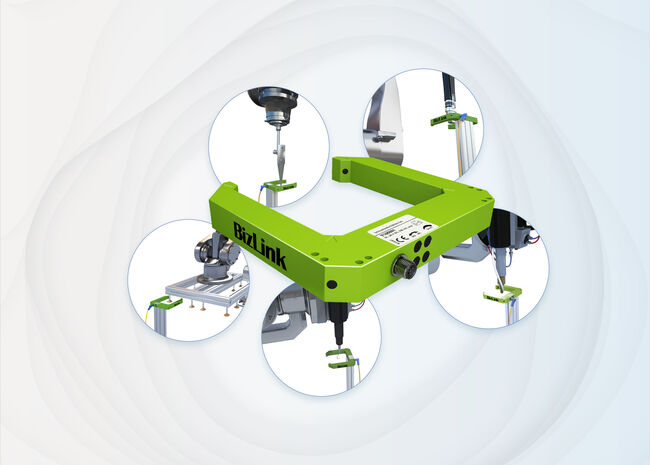
BizLink advintec TCP enables automated, highly precise verification of the robot’s tool center point (TCP) directly in the production environment. Accurate TCP alignment is essential in all robotic applications where positioning precision influences process quality.
The system is independent of the specific application and primarily depends on the geometry of the robot tool. Rotation-symmetric robotic tools can be calibrated particularly easily. Even complex or indirectly measurable tools can be referenced using auxiliary pins or defined reference components.
By compensating measured deviations directly within the robot program, advintec TCP supports long-term positional stability, reduces cumulative inaccuracies and enhances overall process reliability across high-cycle production environments.
careDP – AI-Powered Condition Monitoring
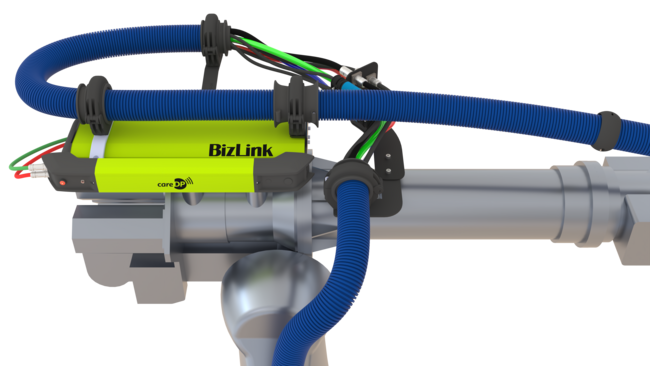
In high-cycle spot welding environments, unexpected cable or dresspack failure can stop production immediately.
careDP continuously analyzes robotic movement behavior and detects early signs of wear or abnormal stress patterns. This enables predictive maintenance planning and significantly reduces unplanned downtime.
Integrated Support for Long-Term Production Stability
By combining:
- Precise TCP measurement
- Durable high-current cable solutions
- Controlled mechanical routing
- AI-based condition monitoring
BizLink strengthens weld consistency, reduces maintenance intervals and improves overall equipment effectiveness (OEE).
Frequently Asked Questions (FAQ) About Robotic Spot Welding
What are the most common causes of downtime in robotic spot welding systems?
The most common causes of downtime in spot welding environments include cable failures, dresspack torsion damage, overheating of power cables, TCP drift, electrode wear, and mechanical instability caused by heavy welding guns. Because spot welding combines high electrical current with dynamic robot motion, both electrical and mechanical infrastructure must be engineered for high-cycle stress conditions.
How does high welding current affect robotic cable performance?
Spot welding requires extremely high current transmission over short intervals. Repeated thermal loading combined with continuous robot motion can accelerate insulation aging, conductor fatigue, and connection instability. Cables designed specifically for robotic welding applications must withstand both thermal stress and torsional movement to maintain consistent conductivity and weld quality.
Why does robot positional accuracy directly impact weld quality?
Even small deviations in electrode positioning can alter force distribution and current flow at the weld point. Misalignment may reduce nugget diameter, cause incomplete fusion, or weaken structural integrity. Maintaining TCP accuracy through calibration and stable dresspack routing is essential for consistent weld integrity.
How do heavy welding guns influence dresspack lifetime?
Spot welding guns generate significant reaction forces during each weld cycle. These forces introduce torsion and mechanical load along the robot arm. Without structured cable routing and strain relief, this can lead to uncontrolled movement, accelerated cable wear, and positioning instability. Engineered dresspack systems reduce stress and stabilize robot motion.
How can predictive maintenance reduce unplanned downtime in spot welding?
Predictive monitoring solutions such as careDP analyze robot motion behavior and detect early signs of abnormal stress or wear in cables and dresspacks. By identifying degradation before failure occurs, manufacturers can schedule maintenance proactively and avoid sudden production stops.
What is the role of TCP verification in high-volume spot welding production?
In high-cycle environments, mechanical wear and thermal expansion can gradually shift the effective tool center point. Automated TCP verification systems detect and compensate for positional deviations directly within the robot program, ensuring long-term electrode accuracy and consistent weld nugget formation.
Ensure Maximum Reliability in Your Spot Welding Production
BizLink supports manufacturers with integrated robotic solutions for demanding spot welding environments — combining durable cables, engineered dresspack systems and calibration expertise to enhance long-term performance.
Let’s evaluate your spot welding application and identify opportunities to improve uptime, weld consistency and system durability.