
Industrial Electrical Print Reading
Get your team the print reading skills they need!
Interested in a free course trial? Create your account, answer three quick questions, and you are ready to go:
START YOUR FREE ONLINE TRAINING TRIAL
Please note: This course is currently offered for the U.S. market only, as electrical standards differ from those in Europe and Asia.
Phone: 248-484-5500
BUS_Training(ät)bizlinktech.com
You Can’t Troubleshoot What You Can’t Read.
BizLink Online Training Builds Industrial Electrical Print Reading Confidence.
Industrial automation systems rely on detailed electrical prints to document power distribution, control circuits, and device connections. Yet many technicians and engineers struggle to confidently read and interpret these prints — leading to longer downtime, troubleshooting errors, and increased reliance on senior staff.
Electrical prints are often complex, dense, and filled with symbols, tags, and conventions that vary by region and standard. Without proper training, even experienced personnel may find it difficult to trace circuits, identify devices, or locate power sources within an industrial electrical drawing.
BizLink Online Training helps close this gap.
The Industrial Electrical Print Reading course equips learners with the foundational skills needed to navigate industrial electrical prints with confidence. Through structured lessons, interactive exercises, and virtual labs, learners gain a clear understanding of print layouts, symbols, tagging systems, and how power and control circuits work together in automated systems.
By strengthening print reading skills, your team can:
- Reduce troubleshooting time
- Improve safety and accuracy during maintenance
- Increase confidence across technicians and engineers
- Support more efficient and reliable industrial operations
Empowered teams don’t just react faster - they work smarter.
Sign up here to empower your team with essential electrical print reading skills
Connecting Electrical Prints to Industrial Automation
Research shows that structured e-Learning is highly effective in helping learners understand and retain complex technical concepts. BizLink applied this approach when developing the Industrial Electrical Print Reading online training course for industrial automation teams.
This approximately six-hour, interactive course provides a clear and practical introduction to industrial electrical prints. Learners build foundational skills in print navigation, common symbols, device identification, tagging systems, and tracing power and control circuits used in automated systems.
Designed to maximize engagement and retention, BizLink’s self-guided Industrial Electrical Print Reading course supports both new and experienced technicians. The course helps ensure your entire automation team develops a consistent understanding of how electrical prints document system operation and component relationships.
Available to anyone with a computer and internet connection, the course consists of structured instructional modules that combine concise text, visual examples, virtual lab activities, and interactive components. Each module is followed by knowledge check questions to reinforce learning. Learners who achieve a passing grade of 75% or higher on the final assessment receive a certificate of completion.

It Begins with Understanding the Print
BizLink designed its Industrial Electrical Print Reading online training course to help learners quickly build the skills needed to read and navigate industrial electrical documentation with confidence.
The course introduces core concepts such as print structure, common symbols, device identification, tagging systems, and circuit tracing used in automated systems. The duration of the course may vary depending on individual knowledge and learning pace. On average, learners complete the course in approximately six hours.
The Course’s Five Intuitive Modules Build Practical Industrial Electrical Print Reading Skills. The Modules Include:
Introduction to Industrial Electrical Prints
Understanding how to read an electrical print begins with knowing its purpose and structure. In this module, learners are introduced to industrial electrical prints, including why they are used, how they are organized, and how standards may vary by region. The module also covers basic navigation techniques, helping learners locate specific information quickly and efficiently within a print.
Electrical Print Sections
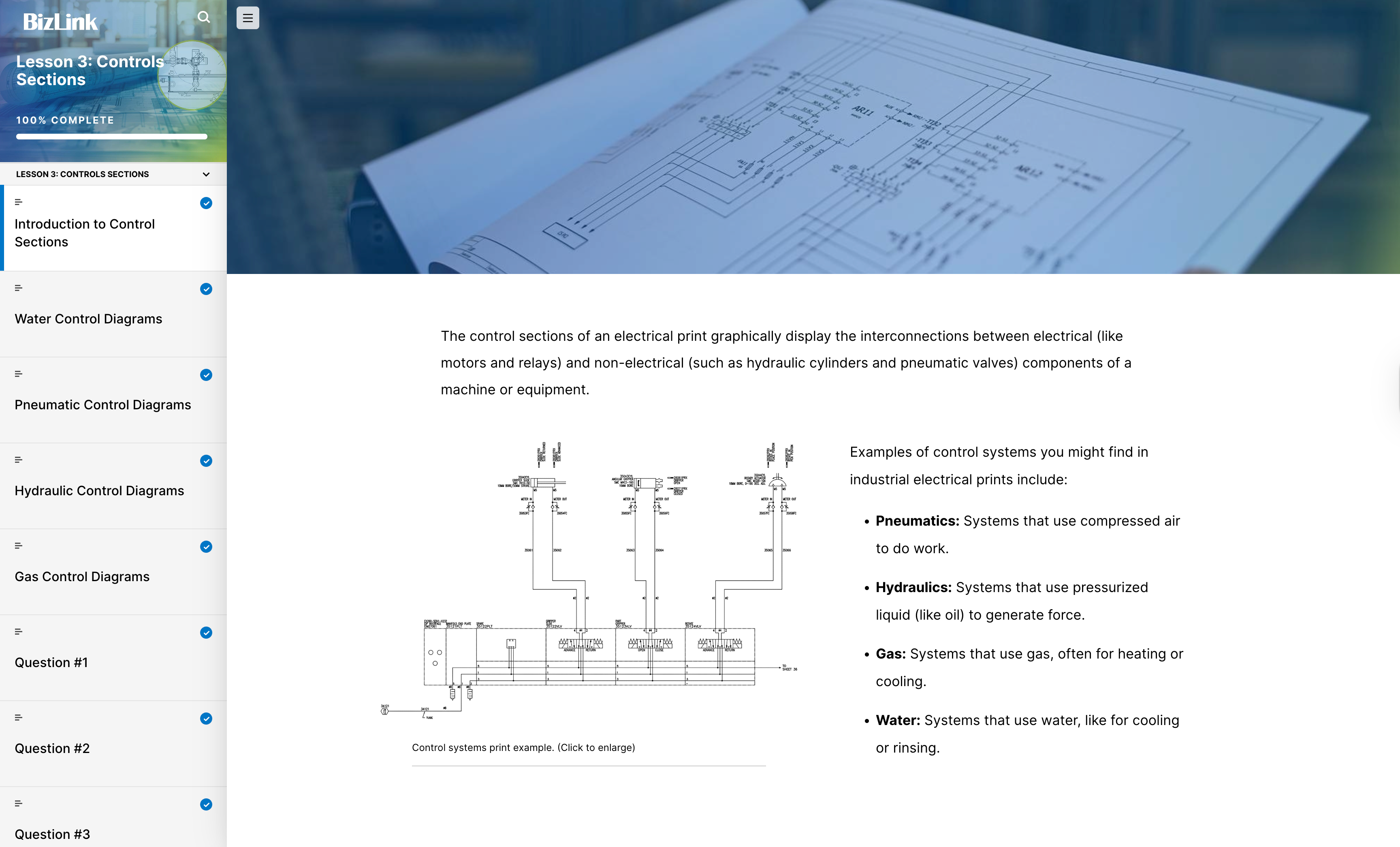
Industrial electrical prints are made up of multiple sections, each serving a specific function. In this module, learners explore common wiring diagram sections, control sections, and miscellaneous layouts. The course explains what information is contained in each section and when it should be used, enabling learners to confidently navigate complex print packages.
Introduction to Symbols and Devices
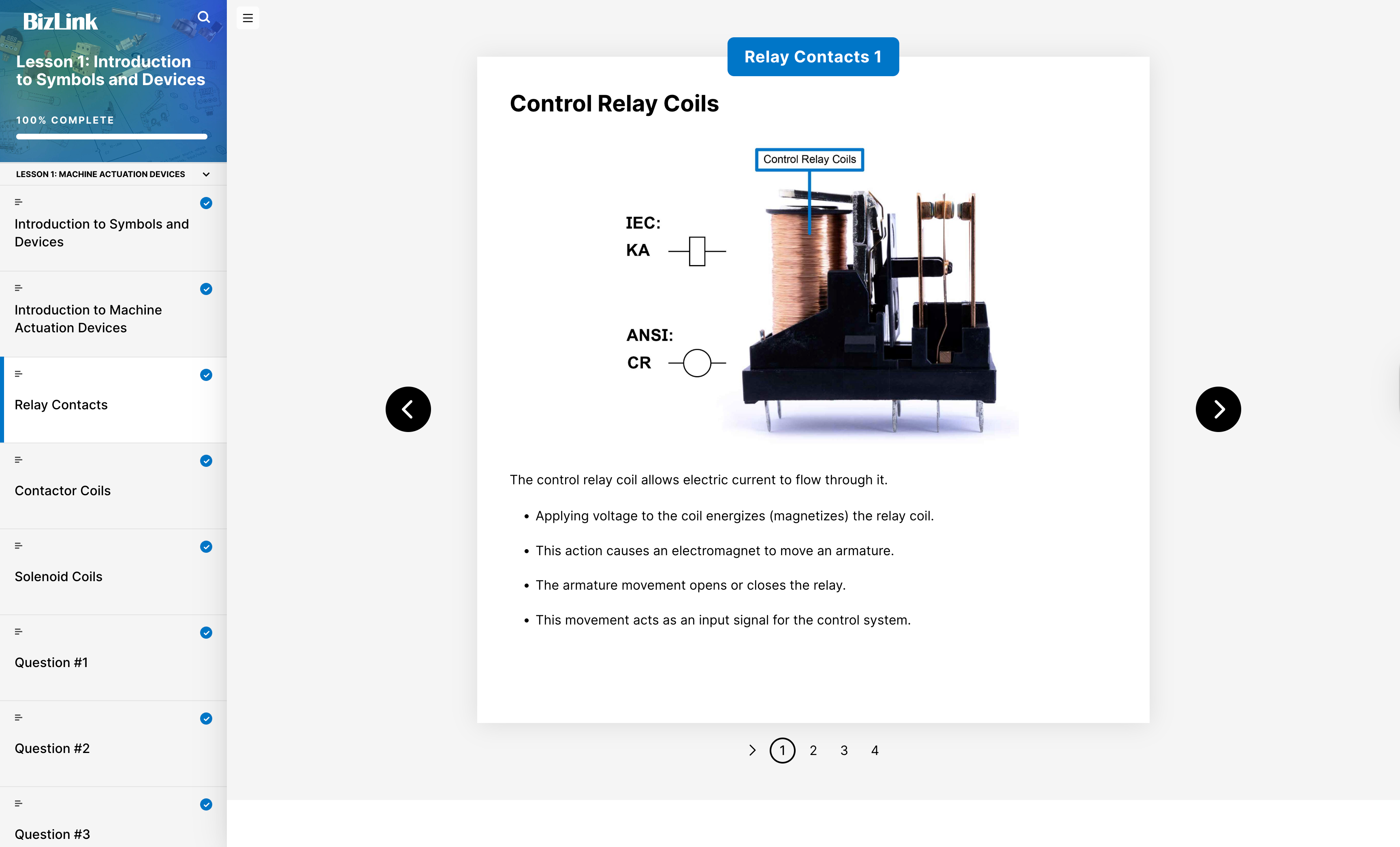
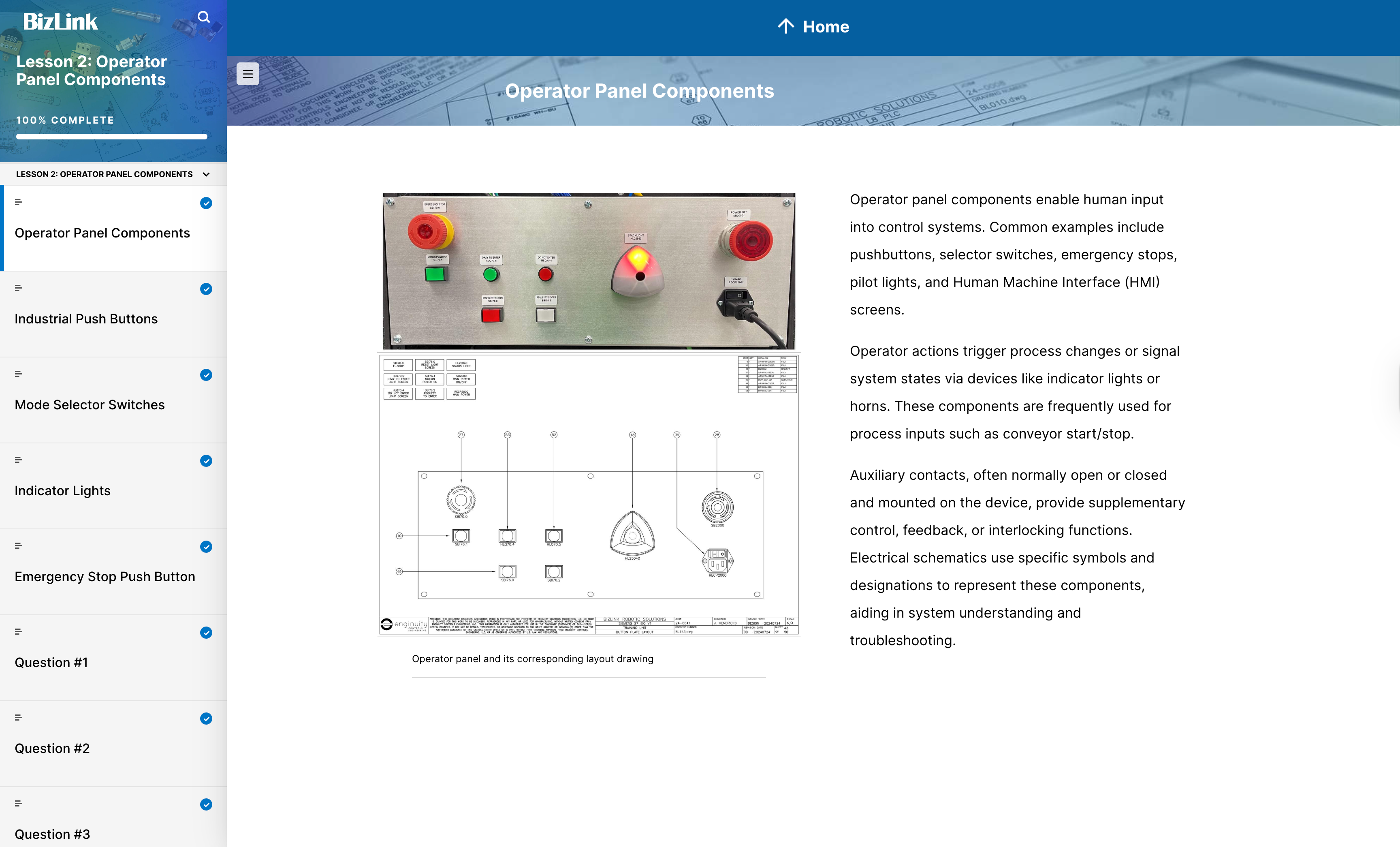
Electrical prints rely on standardized symbols to represent real-world components. This module introduces common IEC and ANSI symbols and connects them to physical devices found in industrial automation systems. Learners identify machine actuation devices, operator panel components, sensing devices, and overcurrent protection devices, building a clear connection between symbols and equipment.
Tagging Systems
Tagging systems play a critical role in identifying components and tracing circuits. In this module, learners study wire, terminal, and cable tagging conventions and learn how tagging supports installation, maintenance, and troubleshooting. A virtual lab reinforces these concepts by guiding learners through locating and verifying a remote I/O power source using an electrical print.
Device and Symbol Correlation
In the final module, learners bring everything together by correlating devices, symbols, and circuits within an industrial electrical print. This module focuses on power distribution, low-voltage control circuits, and common I/O devices. Learners practice tracing circuits and identifying how control and power circuits work together, supported by a virtual lab where they build and label a motor circuit print.

TAKE A TRIAL COURSE SIGN UP TODAY
Get in touch with us: