Cable Management Solutions for Collaborative Robots (Cobots)
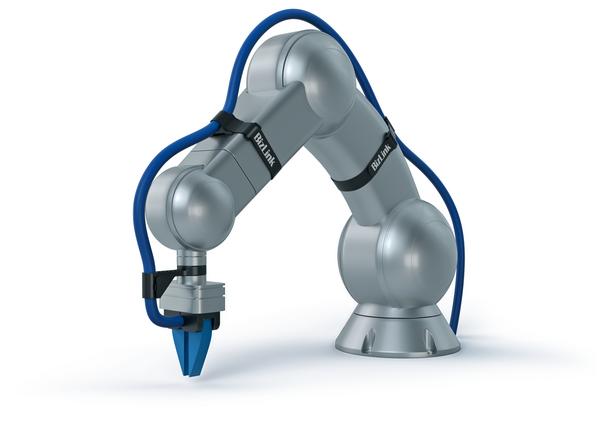
Collaborative robots (cobots) are transforming industrial automation by enabling safe human-robot interaction, flexible deployment, and efficient operation in dynamic production environments. Unlike traditional industrial robots, cobots operate without safety fencing and are often reprogrammed, repositioned, or manually guided.
These characteristics create unique demands on cable management systems and routing solutions. Continuous multi-directional movement, compact robot geometries, and direct human interaction require highly flexible, lightweight, and safe cable management.
BizLink supports manufacturers, system integrators, and OEMs with engineered cable routing solutions designed to ensure reliable performance, long service life, and safe integration of cobot systems.
What Makes Cable Management for Cobots Different?
Cable management for collaborative robots differs significantly from conventional industrial robotics. The combination of flexibility, safety and compact design introduces specific technical challenges.
Human-Robot Interaction and Safety Requirements
Cobots operate in shared workspaces with human operators. Cable routing must therefore:
- Avoid sharp edges and exposed components
- Prevent entanglement or snagging risks
- Ensure safe and predictable movement behavior
In some recent solution designs, there is a tendency to use rigid mounting hardware or components with sharper edges to simplify integration or reduce cost. However, such approaches can increase the risk of cable abrasion, operator contact hazards and unpredictable cable behavior.
Uncontrolled or mechanically aggressive routing can create safety risks and reduce system acceptance in collaborative environments.
High Flexibility and Dynamic Motion
Cobots are frequently used in applications that require:
- Manual guidance
- Frequent repositioning
- Variable and non-repetitive motion paths
This leads to multi-directional movement and continuous torsional stress on cables.
Compact Design and Limited Installation Space
Collaborative robots are typically smaller than traditional industrial robots. This limits available space for cable routing.
Cable management solutions must therefore:
- Support small bending radii
- Fit within compact geometries
- Maintain flexibility without compromising durability
Typical Applications of Collaborative Robots
Cobots are widely used in flexible production environments:
Assembly and Screwdriving
Collaborative robots are frequently used for precision assembly and automated screwdriving tasks. These applications require consistent torque control and stable tool positioning. Reliable cable routing ensures uninterrupted power and signal transmission to screwdrivers and fastening tools, preventing process deviations and unplanned downtime.
Adhesive Dispensing and Gluing
In dispensing applications, cobots apply adhesives, sealants, or coatings with high accuracy. Continuous and smooth motion is critical to ensure uniform material application. Optimized cable management prevents hose and cable interference, supporting precise movement and consistent dispensing quality.
Packaging and Logistics
Cobots support picking, packing and palletizing tasks in dynamic logistics environments. These applications often involve variable motion patterns and frequent repositioning. Structured cable routing reduces the risk of snagging or entanglement, ensuring reliable operation in high-cycle workflows.
Machine Tending and Handling
For machine loading, unloading, and part handling, cobots operate in confined spaces and perform repetitive movements. Cable systems must withstand continuous bending and limited installation space. Proper cable management improves durability, reduces wear, and ensures long-term system reliability.
Industries Using Collaborative Robots
Collaborative robots are increasingly adopted across a wide range of industries:
- Automotive suppliers and assembly operations:
- Cobots support flexible assembly processes, quality inspection, and component handling in automotive production. Their ability to adapt to different models and short production cycles makes them ideal for supplier environments.
- Electronics and semiconductor manufacturing:
- In electronics production, cobots are used for precision assembly, testing and material handling of sensitive components.
- Logistics and intralogistics:
- Cobots are widely used for picking, sorting and palletizing in dynamic logistics environments. They enable automation in warehouses with frequently changing workflows and product types.
- Food and beverage production:
- In food processing and packaging, cobots handle tasks such as sorting, packaging and quality inspection. These environments require hygienic design and reliable operation under challenging conditions.
- General manufacturing and SMEs:
- Small and medium-sized enterprises benefit from cobots due to their flexibility, ease of integration and lower investment barriers. They are often used for repetitive tasks that require quick changeovers and minimal setup time.
Their flexibility makes them ideal for environments with variable production requirements and frequent changeovers.
Key Challenges in Cobot Cable Management
Cable Fatigue Due to Multi-Directional Motion
Continuous bending and torsion can lead to premature cable wear.
Uncontrolled Cable Routing
Loose cables can interfere with robot motion and create safety risks.
Limited Space for Integration
Tight installation conditions increase mechanical stress on cables.
Short Lifecycle of Standard Cable Solutions
Conventional cables are often not designed for cobot-specific movement patterns.
Why Cable Management Is Critical for Collaborative Robot Performance
Cable systems directly influence the reliability, safety and efficiency of cobot applications.
Optimized cable routing supports:
- Safe human-robot collaboration
- Stable tool performance
- Reduced downtime
- Consistent process quality
In flexible production environments, reliable cable management is a key factor for long-term system performance.
BizLink Solutions for Collaborative Robots
Reliable cobot operation requires cable management specifically designed for flexible motion, compact integration and safe human-robot interaction.
BizLink B-Flex – Cable Management for Cobots
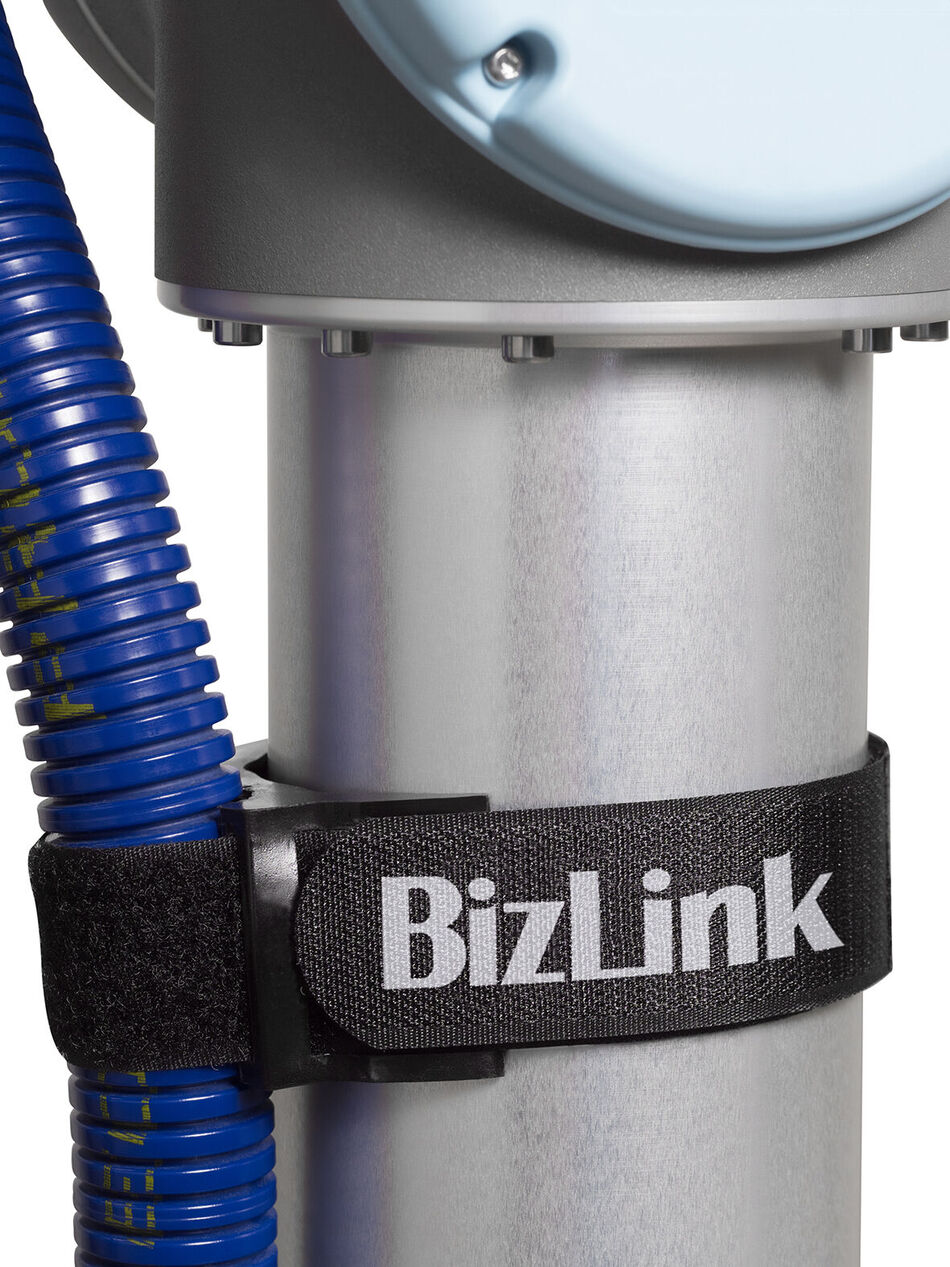
BizLink B-Flex is specifically developed for collaborative robot applications. The system enables flexible, compact and safe cable routing tailored to the requirements of cobot environments.
Cobots operate with multi-directional movement, frequent repositioning and close human interaction. BizLink B-Flex addresses these conditions by:
- Supporting high flexibility under dynamic motion
- Enabling compact integration on small robot geometries
- Reducing torsion and mechanical stress on cables
- Ensuring defined and controlled cable routing
- Supporting safe operation in collaborative workspaces
The system helps maintain reliable cable performance and consistent tool operation in applications where standard routing solutions may not be sufficient.
Read more about BizLink B-Flex
High-Flex Cables for Cobot Applications
In collaborative robot systems, cables must withstand continuous bending, torsion and unpredictable movement patterns.
BizLink high-flex cables are engineered for:
- Small bending radii
- Multi-directional dynamic motion
- Stable power and signal transmission
- Long service life under repetitive load
These characteristics support reliable performance of tools such as screwdrivers, grippers and dispensing units used in cobot applications.
Frequently Asked Questions About Cobot Cable Solutions
What makes cobot cables different from industrial robot cables?
Cobot cables must handle multi-directional movement, smaller bending radii and frequent repositioning. They require higher flexibility and durability.
Why do cables fail more often in cobot applications?
Frequent manual guidance and unpredictable motion patterns increase mechanical stress and can lead to premature wear.
How does cable routing affect cobot safety?
Uncontrolled cables can create entanglement risks and interfere with safe operation. Structured routing ensures predictable movement.
What is the best cable management solution for cobots?
Solutions must be lightweight, flexible and compact while ensuring defined routing and long service life. Systems such as BizLink B-Flex are designed to meet these requirements.
Optimize Your Collaborative Robot Applications with Advanced Cable Management
Whether you are an OEM, system integrator, automation engineer or production manager, BizLink supports you in designing reliable and flexible cobot systems.
Let’s evaluate your application and identify how to improve cable lifetime, system stability and safe operation.
Publication